
With Autumn upon us, no doubt landscape photographers all around the northern hemisphere are lacing up to capture their next batch of vibrant foggy woodland photos. One thing no one ever mentions is just how challenging this genre of landscape photography really is. But there is a way to make it easier on yourself.
Wide-open vistas filled with rivers, lakes, and mountains generally have their own set of issues and challenges, but overall are usually easier to compose and photograph. The distractions, if any, are primarily minor and situated in the background of the landscape. Nothing the clone brush can't sort out. However, when it comes to shooting forests, there are a whole lot of variables thrown into the mix.
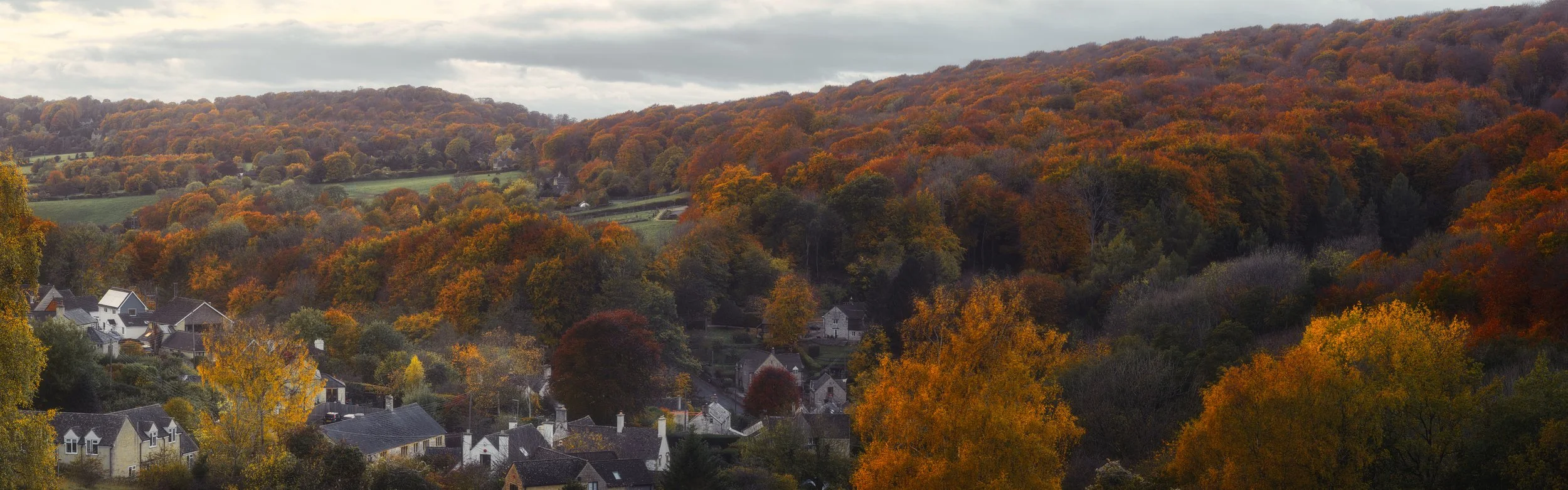
A small Cotswold village at the bottom of a valley, nestled among autumn-coloured trees, makes for great subject matter.
Forests are chaotic. The challenge is to find order within that chaos and arrange it in an aesthetically pleasing way. It sounds simple, but anyone who's photographed forests knows there's much more involved than just capturing a striking tree against the background. It requires a lot of patience, perfect timing, and perseverance before you can even start unpacking your camera and taking your first shot. This kind of photography tests your skill in composition more than any other type of landscape photography, I dare say.
Find A Subject That Stands Out
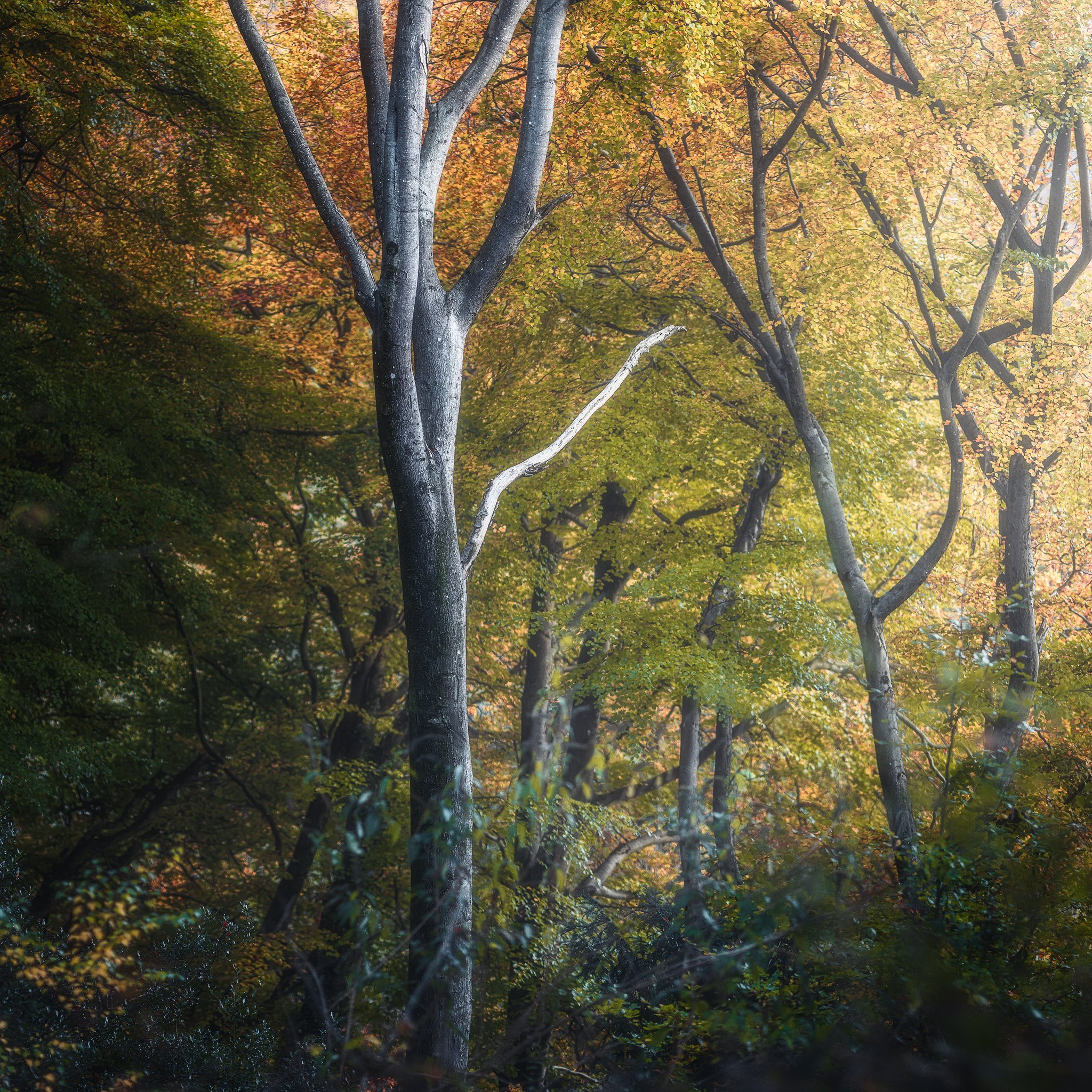
Allocate yourself a good few hours to explore the forest first before even taking your camera out of the bag. Take note of any interesting features around you and move around to see how they can be composed. If there are too many distractions around the subject, move on. I generally spend about an hour just moving around the forest, looking for shapes, patterns, and objects that stand out. Once I find a subject that stands out, I walk around it a few times, study it, and observe how the light falls on it before setting up my camera. I'll then note what's in my foreground and background. If I notice a cleaner patch in the foreground and a less cluttered background from a certain angle, I'll prioritize setting up my shot there. I rarely choose the initial angle I saw. Of course, if you think you've found the perfect angle but your foreground or background is cluttered, don't cut down trees or break branches to remove distractions. Your role as a photographer is only to observe, not to destroy.
Simple Is Better
As I mentioned earlier, forests are chaotic. You think you may have found a good subject, only to find a branch poking out where it shouldn't, a messy foreground, a thin tree disrupting your composition's balance, or occasionally, Doris walking her 10 dogs all rushing your way to smell you and your gear as you're about to take the shot. But there are ways to avoid these issues and ensure success when you're out photographing autumn in full swing. To make it easier on yourself, use a longer focal length. Simplifying the composition will eliminate distractions and guide the viewer's eye directly to what you want to showcase. Alternatively, you can balance the foreground and background by using a wide-angle lens to enlarge the foreground area and look for elements that create a leading line to your subject in the background. The one thing to be cautious of, however, when using wide-angle lenses, is the potential to include too much sky in your shots. If you're shooting on an overcast or foggy day, that sky might blow out compared to the brightness in the forest. It could also draw the viewer's eyes away from your subject, as the human eye tends to notice the brightest part of a photo first.
It's All About Balance
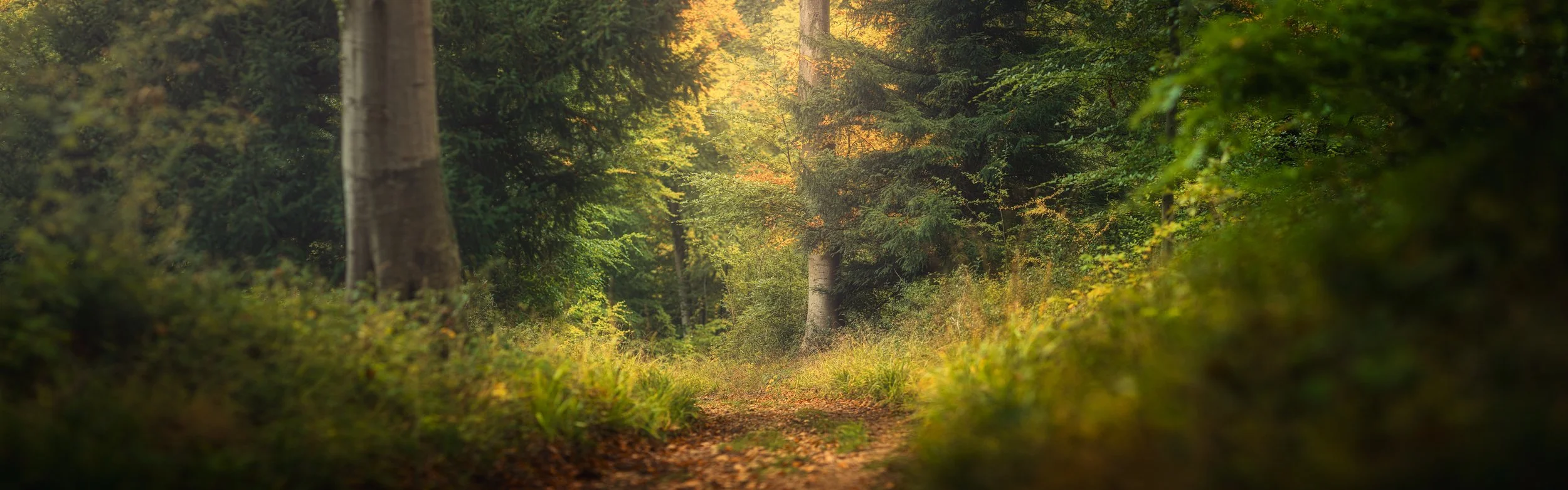
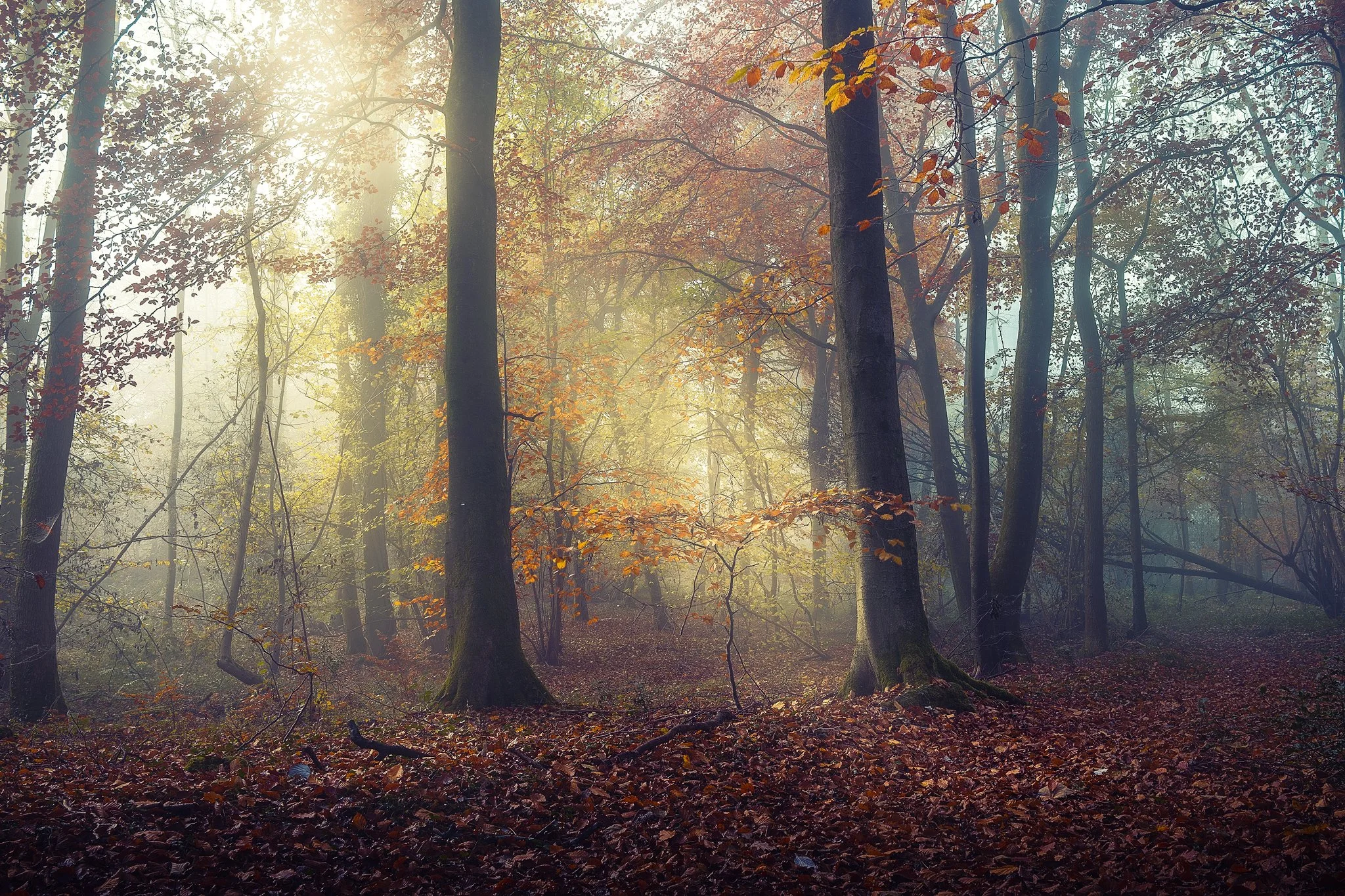
Once you've found a good subject and nailed the angle, it's time to compose your photograph. Here, you'll review your foreground and background again to identify objects, shapes, or patterns that can help balance the composition. There may be two trees in the foreground on either side of your subject that you can use to frame your subject and balance the composition. Or you might find some ferns in the foreground that create a leading line to your subject in the background. Or a small creek leading your eye as it winds through the trees and disappears in the background. All these elements can be used to create a pleasing image and balance your composition.

Use the Light
You might have found the right subject at the wrong time of day, so note its location and come back later. Use apps like PhotoPills to track the sun's position, helping you plan your lighting for the best results. Or check your local forecast, and if fog is predicted, make sure you're prepared. Fog is a great way to simplify your compositions because it reduces distractions and creates mood and atmosphere. Early mornings are usually the best time to see a beautiful sunrise through the trees or to experience foggy conditions, so check the weather before heading out. Visiting the forest on a clear morning or afternoon also has advantages. Often, you'll find the forest backlit by the sun, which boosts contrast, depth, atmosphere, and texture. If there's a hint of dust or moisture in the air, you'll see sunlight shining through the forest canopy. These elements not only improve your composition but can also add storytelling to your images.
Tools That Help Organize The Chaos
Using techniques like HDR or focus stacking can ensure you capture as much dynamic range as possible and keep all details sharp. However, don't hesitate to open your aperture and use a shallow depth of field to blur distractions in the foreground and background. Recalling one of my earlier points about using a telephoto lens, you can leverage focal length to simplify your composition, but you can also choose a larger aperture to further eliminate distractions. There are no rules in landscape photography that say every image must be sharp from front to back. Additionally, you can use Neutral Density filters to slow down movement and create motion blur. If you're shooting in the forest on a windy day and your subject, such as a tree trunk, stays still, but the plants in the foreground and background are distracting, consider capturing a long exposure to add motion blur. The subject will remain perfectly still, while everything around it will be blurred, again simplifying the composition. Furthermore, using a polarizer reduces reflections, enhances color and contrast, and makes greens stand out. Use your creativity along with the tools available to craft a composition that you are proud of.
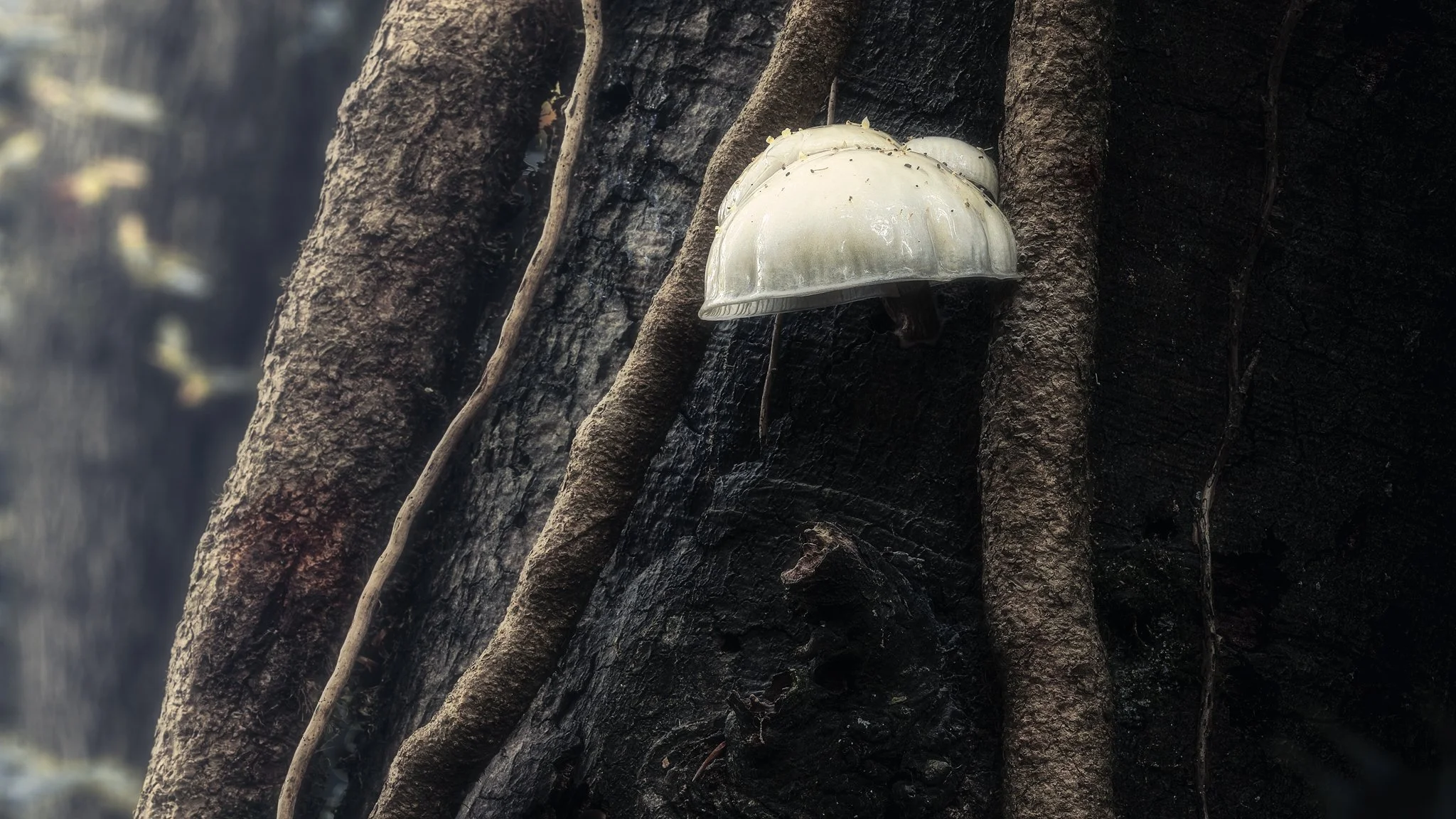
Forest or woodland photography is a challenging form of landscape photography that demands considerable patience. Often, you'll find yourself returning to the same spot weeks or months later, only to discover that the environment has completely changed, offering new opportunities. It's a great way to test your capabilities and refine your compositional skills.